Tire Pressure and Load Limits: Common Mistakes Before a Festival Trip
Festival trips often mean extra luggage, gifts, and passengers. The car sits lower, the tires work harder, and small mistakes in pressure or loading can affect handling and braking. This article explains the most common errors drivers make when preparing for a trip with a full car, and how to avoid them with sensible habits that fit into an ordinary morning.
Why the load matters
Every vehicle has a maximum load, which includes passengers, luggage, roof items, and any towed weight. Exceeding it can strain the suspension, brakes, and tires. Even when you stay within the limit, the way weight is distributed matters. Heavy items stored high or far behind the rear axle can change steering feel, especially in strong wind or on sharp bends.
The handbook and the label inside the driver’s door frame usually show the relevant limits. Read them before you pack, rather than estimating from memory. A few minutes of reading is far more reliable than guessing how much a full set of suitcases weighs. If you plan to add a towed trailer, the figures change, so follow the guidance for that combination in your handbook.
Check pressure when the tires are cold
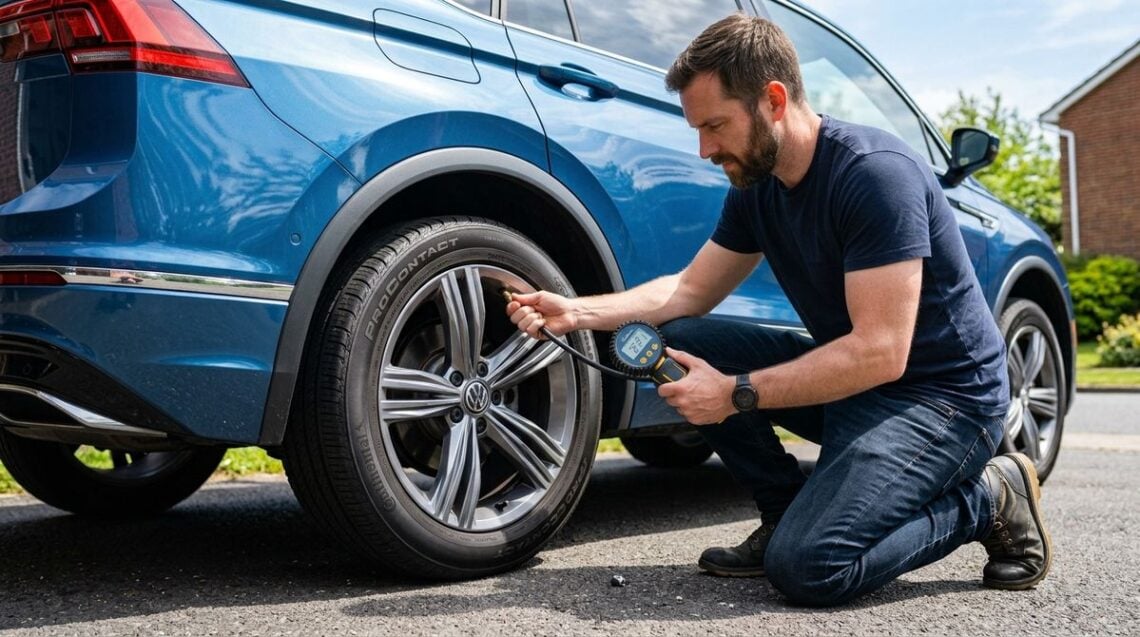
Many drivers check tire pressure straight after a long drive, when the tires are warm. Warm tires read higher than they will once they cool, so the reading can mislead you. Check the pressure in the morning, before the car has been driven, and inflate to the figure specified for your load. If you are unsure which figure applies, use the one for a fully loaded car when the trip includes many passengers and luggage.
Use a reliable gauge rather than a roadside machine that may be out of date or inaccurate. A pocket gauge kept in the glovebox helps you check the spare and all four tires consistently, which matters more than an occasional check at a busy service station.
Note the reading in a small log in your phone, with the date and the load you carried. Over a few months, the log shows whether a tire loses air steadily, which is far easier to spot than a single surprising reading on the morning of a long drive.
Check the spare and the tools
A spare tire is only useful if it is inflated and the tools are present. Check the spare, the jack, and the wheel brace before you leave, and make sure you know how to use them. Keep the spare’s pressure written on a card in the boot, so it is easy to confirm during a routine check. Many drivers discover on the roadside that a wheel bolt is too tight to loosen without the proper lever. A short practice at home removes that surprise and makes a puncture far less stressful.
Secure the roof load
Roof boxes and racks add height and change how the car behaves. A box packed with heavy items can make the car more prone to sway in strong wind. Pack heavy items low and central, stay within the rack’s rated limit, and do not exceed the roof load shown by the manufacturer. Check that the box is fitted securely before you set out. Lock the box if it has a lock, and keep the key with the driver rather than in a bag that might be unloaded first.
After the first stop, check the straps and clamps again. Vibration can loosen them over time, and a quick check before the next stretch of road is a simple habit that prevents loud and dangerous surprises. Readers may also want to visit everyblogy.com. You can also visit Why So Expensive for more reading.
Pack with a plan
Passengers are part of the load too. Adults and children in the back seat, along with booster seats and cushions, all add weight. If the car is full, expect longer braking distances and keep your speed moderate. Leave more space between your car and the vehicle ahead, and avoid sudden braking where possible.
A simple packing plan can prevent many problems. Consider these habits:
- Heaviest items low and close to the middle of the car
- Soft bags used in place of hard cases wherever possible
- Nothing loose on the back shelf or in the footwell
- Essentials kept within reach of the driver’s seat
- Roof loads kept within the manufacturer’s limit
For a related read on this site, see What to Do When Your Car Breaks Down. Use them alongside the official documents for your specific model.
A well loaded car is easier to drive and more pleasant for everyone. Check pressure when the tires are cold, secure the roof, pack heavy items low, and keep essentials close. The result is a calmer journey and more room to enjoy the holiday.


You May Also Like

How to Build an Evening Wind-Down Routine for Deep Rest

Common Mistakes When Buying a Used Car on a Tight Budget